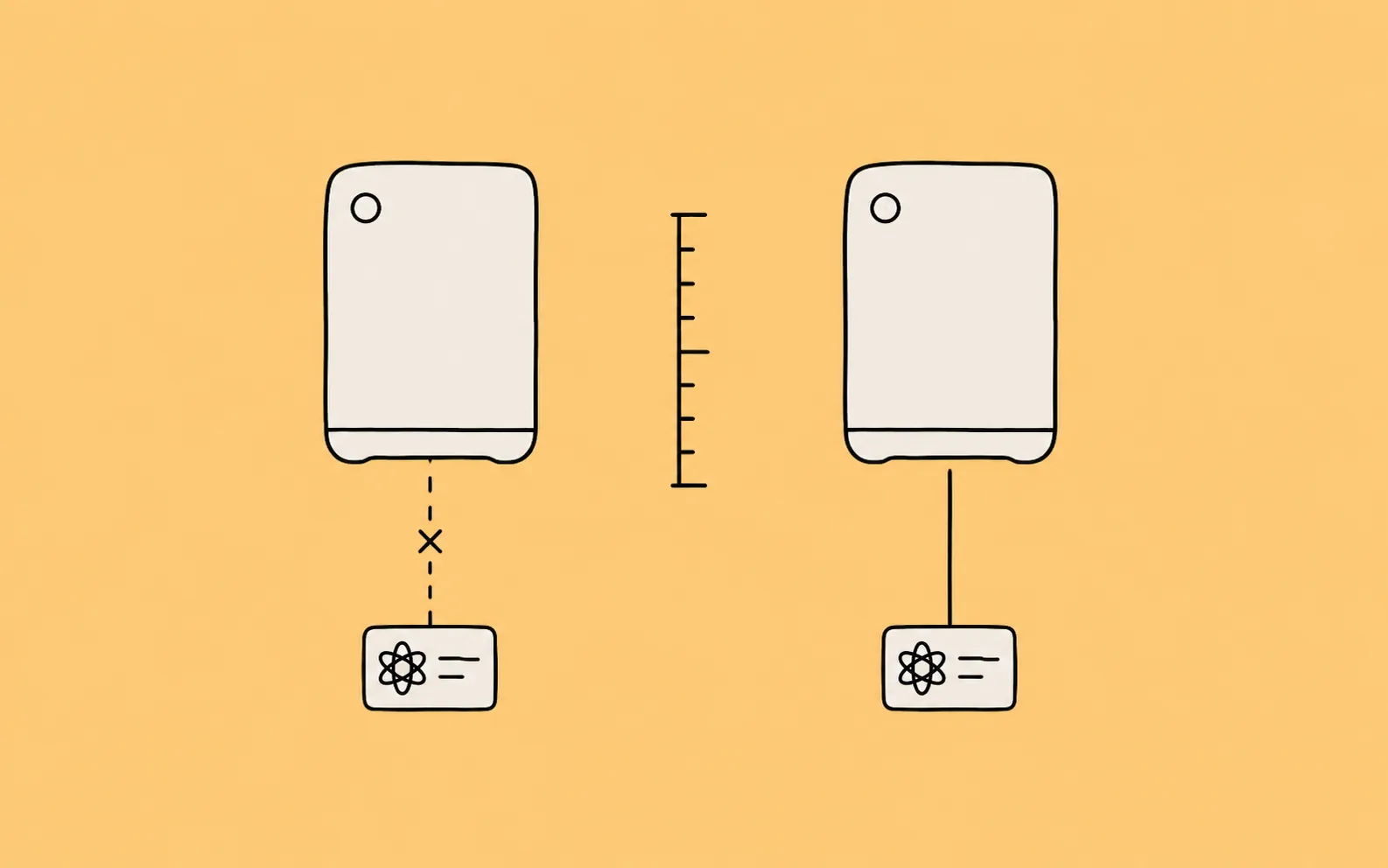
When someone asks an AI system about a product, it is tempting to imagine a simple process:
Question → manufacturer website → answerThe real information environment is much messier.
An answer may be assembled from information originating across manufacturer pages, regulatory databases, retailer listings, manuals, component documentation and third-party sources.
The AI is not simply reading your product page. It is effectively reconstructing an identity.
One product exists in many information systems
Inside the manufacturer, a product may have a precise internal identity:
Product: Portable Device X
Model: X6
Catalog number: 501
Revision: B
But outside the company, the same physical product may appear very differently.
- A regulator may know its embedded transmitter.
- A retailer may know its SKU.
- A distributor may use another title.
- A support PDF may refer to an earlier model designation.
- A component supplier may describe hardware that exists inside the product.
None of those records necessarily represents the whole product. AI has to determine how they fit together.
This is where seemingly intelligent answers can fail
Imagine an AI finds the correct manufacturer page, a valid regulatory record, and a technically accurate component specification.
All three sources are trustworthy. The answer can still be wrong if the AI concludes:
Product = Component = Regulatory Granteewhen the real relationship is:
Product → contains Component
        → Component has Regulatory Authorization
        → Authorization belongs to another legal entity
The failure isn't necessarily hallucination. The facts may all exist. The relationship between the facts is wrong.
Manufacturer Truth and Verification Truth are different things
This distinction becomes particularly important for regulated products.
The manufacturer is authoritative about many aspects of its product. A regulator or certification authority is authoritative about a different set of claims.
Those truths complement one another. They should not be collapsed into one record.
A useful product-information architecture therefore needs to preserve both Manufacturer Product Truth and Verification Truth, with an explicit relationship between them.
Why this matters beyond compliance
Identity errors propagate. If AI starts with the wrong model, every downstream question is vulnerable:
- What are its specifications?
- Is it compatible with another product?
- Is it certified?
- Has it been recalled?
- Is this the current model?
- Should I buy it?
- Where can I buy it?
The first error can happen before the AI has generated a single obviously false fact. It simply identified the wrong thing.
Product identity is becoming infrastructure
The web was largely built around documents and pages. Commerce added catalogs, SKUs and feeds. AI needs something more explicit: what the product is, which records belong to it, and what relationship each record has to the product.
That is why Product Truth for AI cannot be reduced to publishing more content. Sometimes the missing information is not another paragraph. It is an edge between two entities.
The next generation of product infrastructure will need to make not only facts machine-readable, but relationships machine-understandable.