Some of the most interesting AI product errors begin with two correct sources.
Connected products make this particularly visible. A finished product can contain a wireless module manufactured and authorized by another company.
The manufacturer's documentation describes the finished product. The FCC record describes the authorized radio equipment.
Both records can be correct. The danger begins when AI treats them as describing the same entity.
A regulatory record may describe something inside the product
Consider the structure:
Consumer Product
  → contains Wireless Module
  → authorized under FCC ID
  → granted to FCC Grantee
There can be several organizations and identities in this chain.
The consumer brand does not have to be the FCC grantee. The model appearing in the FCC record does not have to be the commercial product model. And an authorization covering a radio module does not automatically describe the regulatory status of every aspect of the finished product.
These differences are not necessarily data defects. They are role distinctions.
AI has to preserve those distinctions
Suppose an AI system is asked: who manufactures this product and what is its FCC ID?
It may correctly find the manufacturer. It may correctly find an FCC ID. It may correctly identify the FCC grantee.
But if the answer collapses those identities into one organization or one product, the resulting statement can change the meaning of the underlying evidence.
This becomes even more important when a question moves from identification to interpretation:
What does this FCC authorization prove?
Equipment authorization has a particular regulatory scope. Turning that fact into a broader product-safety, quality or performance claim is a different statement.
Regulatory data is also product identity data
This is why regulatory databases are useful for much more than compliance checks. They expose relationships that ordinary ecommerce catalogs often do not: who applied, what equipment was authorized, which identifier belongs to it, and what role that equipment plays.
For AI systems, those relationships are part of Product Truth. Not because the regulator defines the entire product, but because the regulator provides a separate Verification Truth that must be connected to the correct product identity without being confused with it.
The enterprise problem is subtle
A company can publish completely accurate information. The authority can maintain a completely accurate authorization. Yet a downstream AI answer can still create an inaccurate representation by connecting those records incorrectly.
That means correcting the manufacturer's webpage may not solve the problem. The webpage wasn't necessarily wrong. The missing layer was the explicit relationship:
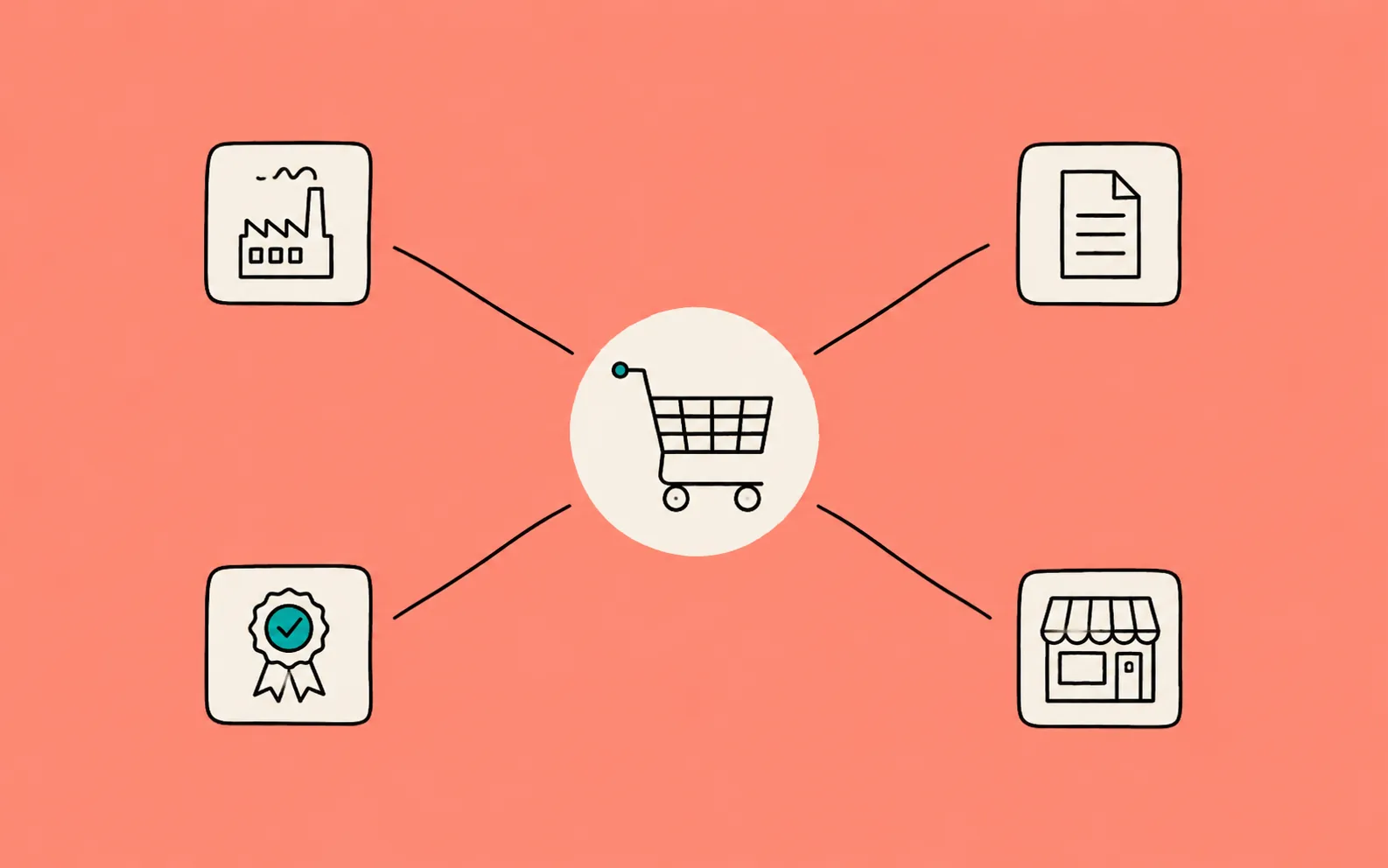
Finished Product → contains → Authorized Component → verified by → Regulatory RecordThis is what Product Truth infrastructure must preserve
Product information is becoming relational. Not everything associated with a product belongs to the product in the same way.
The difference between is, contains, manufactured by, authorized under, sold by and replaced by may determine whether an AI answer is accurate.
For regulated and connected products, those verbs are infrastructure.
A correct regulatory record is not enough. AI also needs to know what the record is a record of.